
Sexuality, Stigma, and Self-Recognition
In Search of Lost TimeThe narrator examines hidden sexual identities through Charlus, Jupien, and the women around Albertine, while revealing how stigma distorts both self-understanding and social observation.
increasing Bearing strength in each event
 decreasing
Bearing strength in each eventdecreasingFlowers and Insects
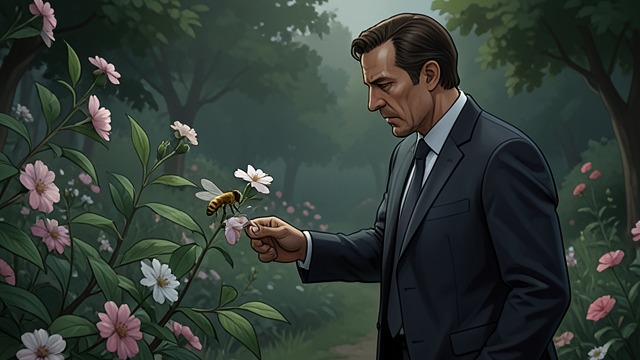
A Natural Analogy
Desire as correspondence
The narrator compares sexual encounters to pollination, using plants and insects to imagine unlikely conjunctions. The analogy turns a social secret into a natural pattern.
Beauty and limitation
The metaphor gives the encounter dignity but also frames sexuality through biological ideas. It is an interpretive lens rather than a neutral scientific account.
A Hidden Community

Secrecy and Recognition
Shared signs
The narrator imagines a dispersed network whose members identify one another through speech, habit, and circumstance. Social exclusion creates both secrecy and mutual recognition.
The narrator’s limits
His account is sweeping and sometimes prejudiced. The novel distinguishes the reality of stigma from the narrator’s incomplete theories about those who experience it.
Charlus’s Public Mask

Identity Under Watch
Contradictory signals
Palamède de Charlus asserts masculinity while gestures and speech reveal other aspects of his identity. Different audiences read him differently.
Exposure and concealment
His position depends on which social circle is observing him. A trait hidden in one setting becomes obvious in another.
The Women’s Unspoken Signals
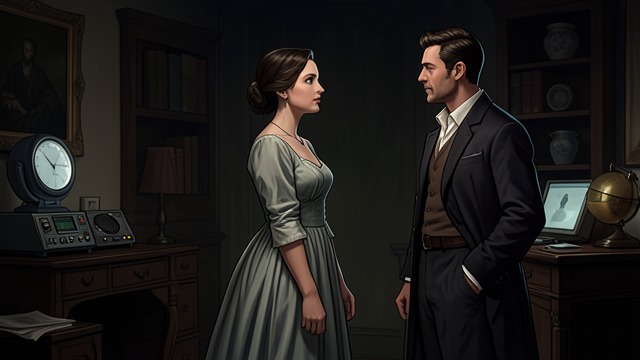
Desire Without Clear Evidence
Looks and gestures
The narrator observes women’s glances and embraces and interprets them as signs of shared desire. Their meanings remain uncertain because nobody explains them to him.
Stereotypes enter perception
His fear turns ordinary intimacy into evidence of a hidden sexual world. The account reveals as much about his anxiety as about the women he watches.
A Stigmatized Love

Desire and Constraint
Love made dangerous
The narrator’s reflections connect hidden desire with public shame, isolation, and the need to conceal. Personal relationships unfold under the pressure of social judgment.
A conflicted vocabulary
The novel attempts sympathy while retaining period language and assumptions. Its treatment of sexuality therefore exposes both the violence of stigma and the limits of its narrator’s understanding.
At the opening of Part One
After the narrator recognizes Palamède de Charlus
During the receptions and dinners of Part Two
During the Balbec season
At the end of the Balbec episode
